Cash-Flow and Settlement Cycles: From Savings Bonds to Online Casino Withdrawals
Tuesday, June 23th, 2026
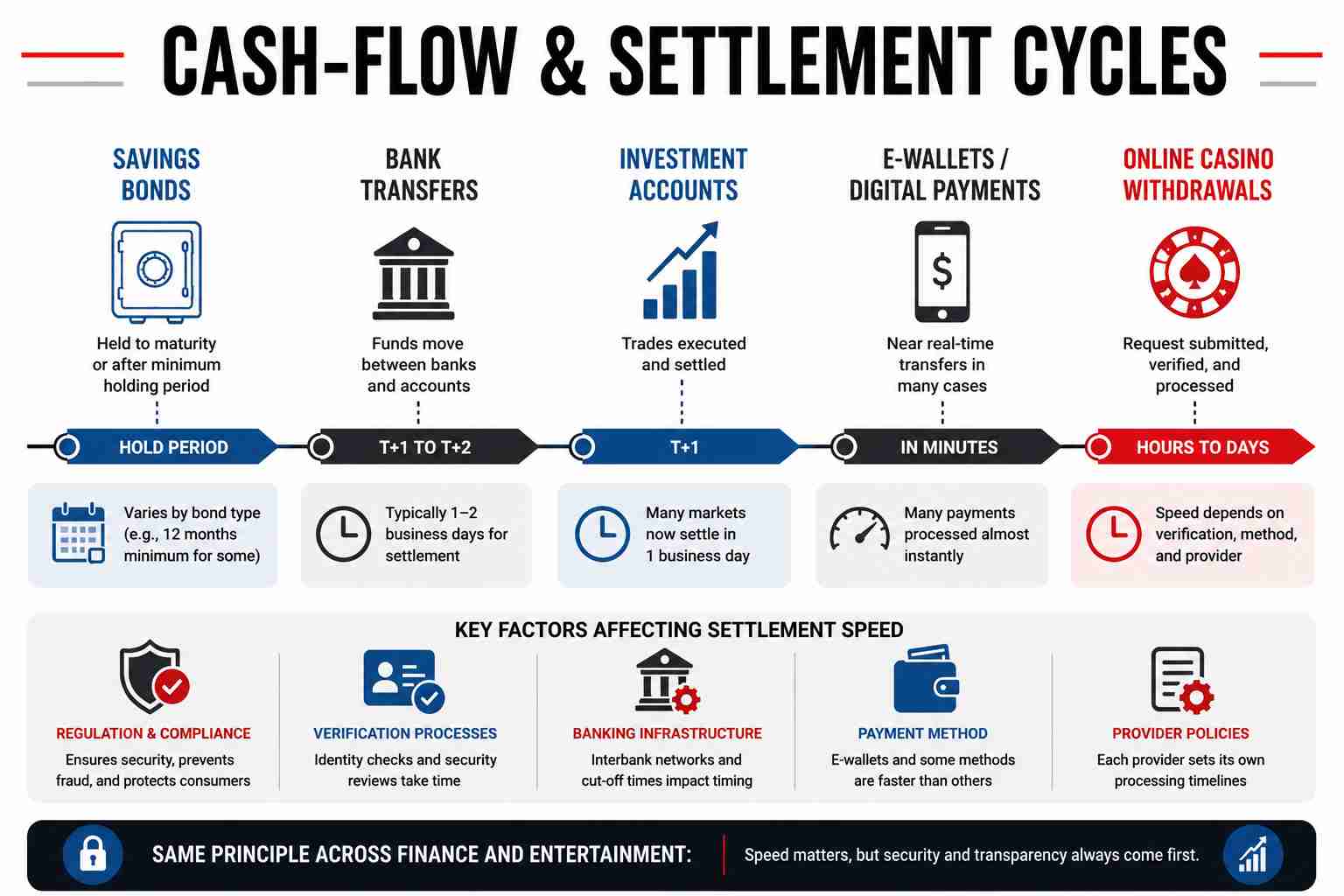
One of the most overlooked aspects of personal finance is timing. Whether you're purchasing a Treasury security, redeeming a savings bond, or transferring money between accounts, the movement of funds rarely happens instantly. Settlement cycles, holding periods, and redemption rules all play a role in determining when money becomes available.
For decades, investors have understood that financial products operate according to defined timelines. What has changed in recent years is consumer tolerance for delays. As digital payments become faster and more transparent, expectations around access to funds have expanded well beyond traditional banking and investment products.
Understanding Settlement Cycles in Savings Products
Settlement cycles exist to ensure that financial transactions are completed accurately and securely. Historically, many securities transactions followed a T+2 settlement schedule, meaning trades settled two business days after execution. In recent years, many markets have moved toward T+1 settlement, shortening the waiting period while maintaining safeguards against errors and fraud.
Savings products operate under similar principles. Although they may not be actively traded like stocks, many savings vehicles include redemption windows, minimum holding periods, or processing delays that affect liquidity. Investors who expect immediate access to funds can be surprised when these restrictions come into play.
Understanding these timelines is an important part of managing cash flow. The difference between available funds today and available funds next week may influence budgeting decisions, emergency planning, or investment strategies.
Redemption Rules and Holding Requirements
U.S. savings bonds provide a useful example. Certain bond types include mandatory holding periods before redemption is permitted, while others may involve interest penalties if redeemed too early. These rules are designed to support long-term saving behavior and maintain the integrity of the program.
Readers interested in how savings bonds have been covered historically in major publications can review this overview of savings bonds in the newspapers. Likewise, investors seeking clarity on yield calculations and redemption timing may find the Series EE interest rate rules guide helpful.
While the details vary by product, the underlying concept remains consistent: access to funds is often governed by predetermined timelines rather than immediate availability.
Why Consumer Expectations Have Changed
The rise of online banking, mobile payments, and real-time transfers has dramatically altered public expectations regarding money movement. Consumers increasingly expect transactions to occur within minutes rather than days.
This shift is understandable. Many financial institutions now provide faster payment rails, quicker account verification systems, and near-instant peer-to-peer transfer capabilities. As a result, waiting several business days for funds to arrive can feel outdated, even when legitimate compliance and processing requirements remain necessary.
Importantly, this expectation for speed has spread beyond traditional banking products. Consumers now evaluate a wide range of services based partly on how quickly funds can be deposited, transferred, or withdrawn.
From Financial Settlement to Regulated Entertainment Payouts
The influence of faster payment expectations is increasingly visible in Canada's regulated online gaming sector. Just as investors compare settlement timelines when selecting financial products, many consumers now compare withdrawal processing times when evaluating digital entertainment platforms.
National Post recently examined fast-payout casinos for Canadian players in more detail here, highlighting the growing importance of efficient withdrawal systems and transparent processing practices. The discussion reflects a broader trend rather than a gaming-specific phenomenon: consumers increasingly value predictable access to their funds regardless of the service category.
Importantly, withdrawal speed does not eliminate the need for verification procedures. Regulated operators must still comply with identity verification, anti-money laundering requirements, and responsible gaming regulations. The goal is not instant payouts at all costs, but rather efficient processing within a compliant framework.
Balancing Speed and Security
The same balance exists throughout financial services. Faster settlement is beneficial, but safeguards remain essential. Verification checks, fraud prevention measures, and regulatory compliance requirements all contribute to transaction integrity.
Whether an individual is redeeming a savings bond, transferring investment proceeds, or requesting a withdrawal from a regulated online platform, processing systems must balance convenience with security.
This balance is particularly important as digital financial ecosystems become increasingly interconnected. Consumers often interact with multiple platforms that rely on different payment processors, banking partners, and compliance frameworks.
Transparency Matters More Than Absolute Speed
While shorter settlement times attract attention, transparency is often the more valuable characteristic. Consumers generally respond positively when they understand how long a transaction will take and why.
For this reason, financial educators continue to emphasize the importance of understanding product terms and processing requirements before committing funds. Clear expectations help prevent frustration and support better decision-making.
The Financial Consumer Agency of Canada provides resources that help consumers understand financial products, payment systems, and their rights when dealing with financial institutions.
Final Thoughts
Settlement cycles have always been a fundamental part of financial systems. From savings bonds and investment accounts to modern digital payment networks, money moves according to established rules designed to balance efficiency, security, and regulatory compliance.
What has changed is consumer expectation. As payment technology continues to evolve, demand for faster access to funds has expanded across industries. Canadian online casinos are simply one example of a broader trend in which withdrawal speed has become a competitive consideration. The underlying lesson remains familiar to investors: understanding settlement timelines is essential for managing cash flow effectively, regardless of where funds are being held or transferred.
 Loading...